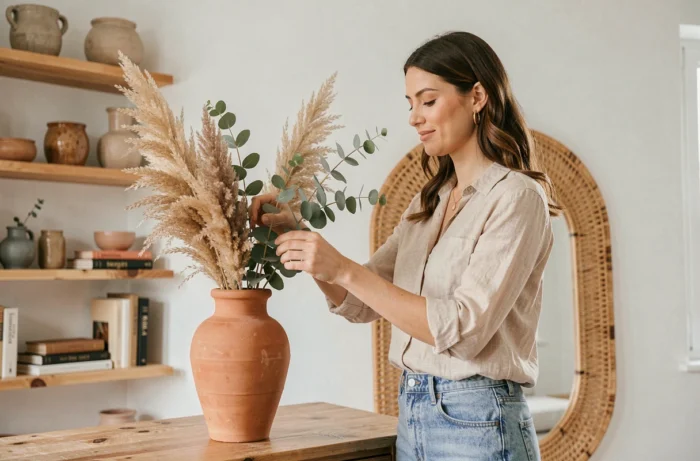
An interior that seems dated rarely has a furniture problem. The diagnosis revolves around three technical parameters: the distribution of light sources, the coherence of the color palette, and the ratio between empty and occupied surfaces. Working on these levers methodically allows you to transform a room without replacing a single piece of furniture.
Empty/Full Ratio and Visual Reading of Interior Space
Decorative overload remains the primary factor in the perceived aging of a room. We recommend applying a simple rule: each horizontal surface should display no more than two or three objects maximum. Coffee tables, consoles, open shelves, kitchen countertops – the principle applies everywhere.
Sorting does not mean throwing away, but rotating. Store half of the visible objects in a box for a few weeks, then reintroduce them one by one. You will find that most did not contribute anything to the overall composition.
On a shelf, alternating one object, one book laid horizontally, and an empty space creates a rhythm that the eye decodes as ordered. Accumulation without intervals produces the opposite effect: visual noise that prevents distinguishing each element. Stores like Ma Déco Pas Cher offer targeted accessories that work precisely because they are designed to be placed alone, not stacked.
Multi-Point Lighting: Structuring the Ambiance of a Living Room or Bedroom
A single ceiling light flattens the entire room. The current trend confirms what interior architects have practiced for a long time: multiplying low and medium light sources to sculpt the volumes.
Three levels are sufficient in a living room:
- A reading lamp or bedside lamp near the sofa, positioned at shoulder height, which delineates the resting area
- Indirect lighting behind a piece of furniture or under a shelf (warm white LED strip), which visually enlarges the room
- A lamp placed on the console or sideboard, whose shade directs the beam downward to create an intimate area
The color temperature matters as much as placement. Below 3,000 kelvins, the light leans towards warm yellow and makes textiles more inviting. Above that, the ambiance turns clinical. Current LED bulbs allow you to choose this value for just a few euros.
In a bedroom, removing the ceiling light in favor of two bedside lamps and a discreet string of lights is enough to radically change the perception of volume. The cost remains negligible compared to the result.
Restricted Color Palette and Targeted Painting
We observe a recurring mistake: wanting to “energize” an interior by multiplying colors. It is the opposite approach that works. A palette of a maximum of three shades per room (one dominant neutral, one secondary, one accent) gives an impression of coherence that the brain associates with a well-kept space.
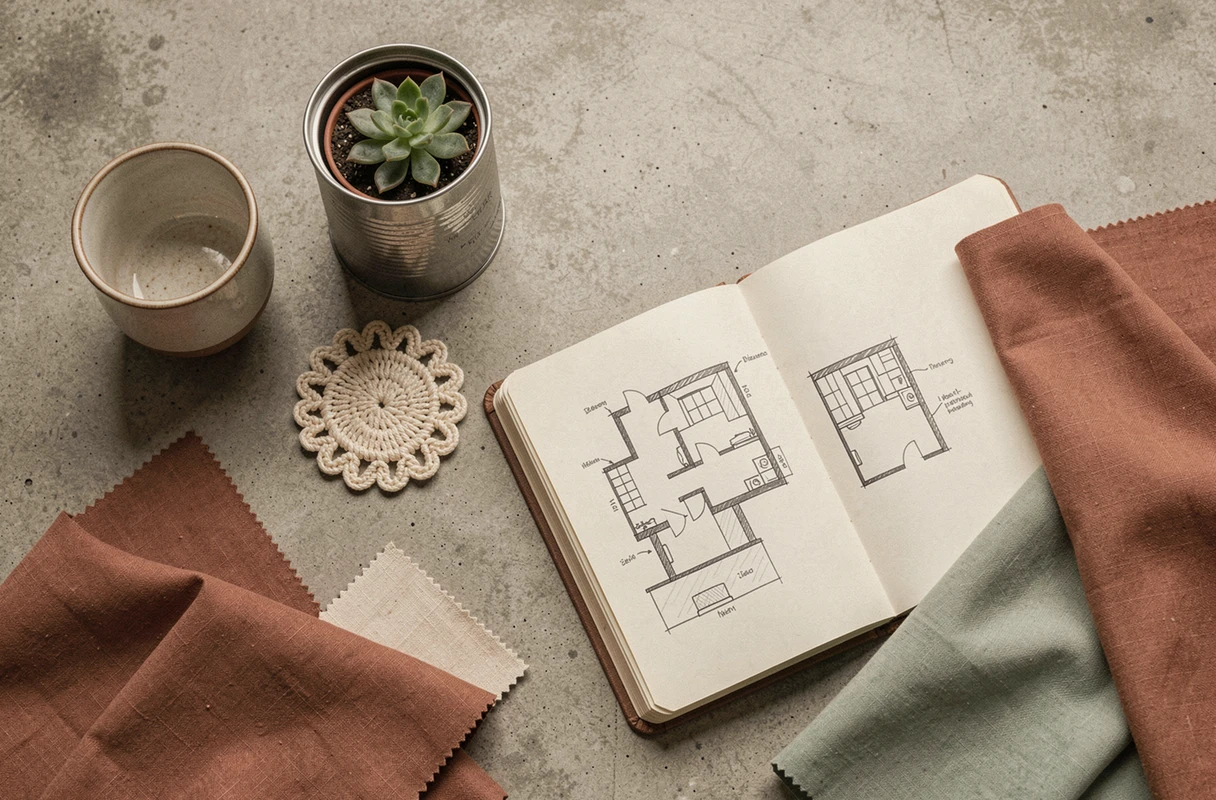
The accent wall remains the gesture with the best effort/impact ratio. A single wall painted in a strong shade (terracotta, sage green, slate blue) transforms the reading of a living room or bedroom for the price of a pot of paint. Earthy colors and muted greens dominate current trendy palettes and have the advantage of matching both light and dark wood furniture.
For those who rent their homes or hesitate to paint, framed or glued wallpaper scraps on a limited wall area produce a similar effect. This approach falls under upcycling: leftover rolls can be found for almost nothing at flea markets or on resale platforms.
Coordinated Textiles: The Cheapest Lever per Square Meter
Cushion covers, throws, curtains, and rugs form a set we call the “skin” of the room. Changing this skin costs a fraction of the price of a piece of furniture but alters the perceived ambiance much more.
The technical rule: choose textiles in the same tonal family as the accent wall, varying the textures (linen, corduroy, crinkled cotton). The contrast of materials replaces the contrast of colors and avoids the catalog effect. A textured short-pile rug visually anchors the living room, while a flat and plain rug leaves the space floating.
Upcycling and Second-Hand: A Fully-Fledged Decor Buying Channel
Second-hand is no longer a fallback solution. Flea markets, garage sales, and peer-to-peer platforms have now become the first reflex for sourcing accent furniture and decorative objects with strong character.
The pieces that benefit most from being thrifted:
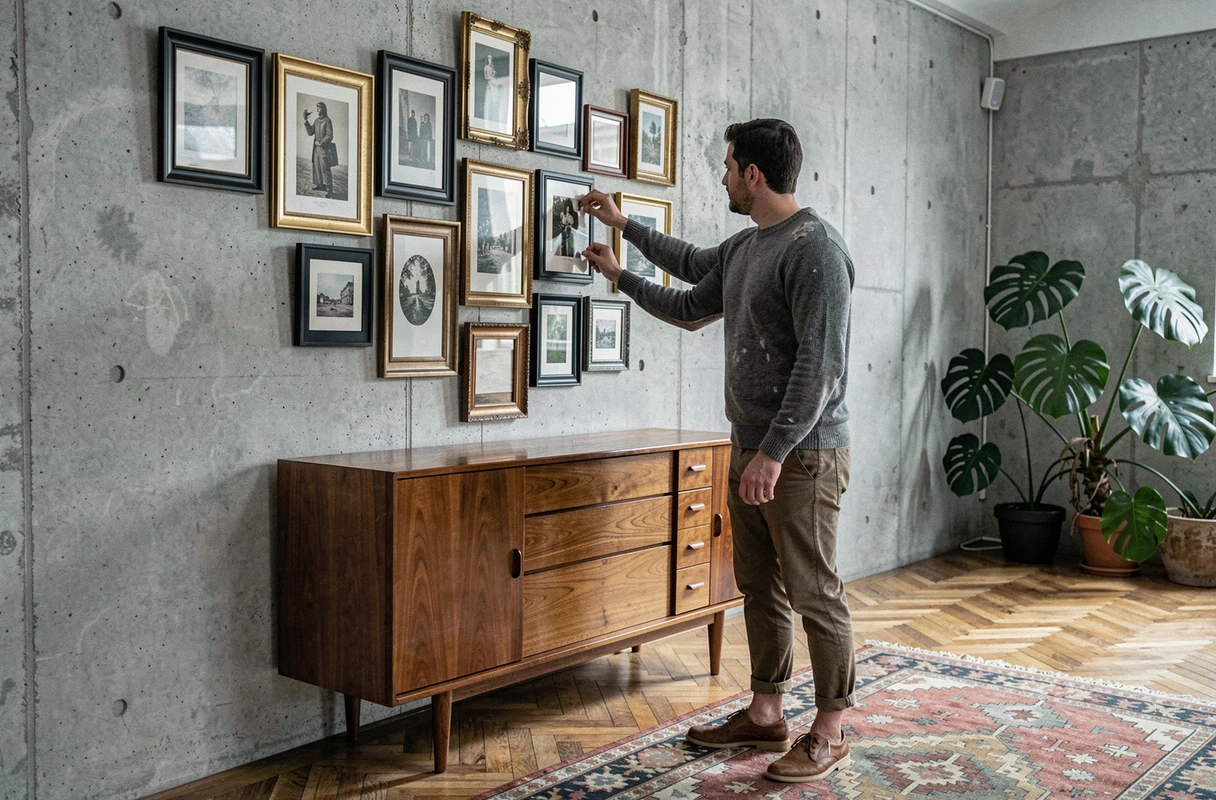
- Old frames, which can be grouped in a wall accumulation with mismatched formats to dress up a hallway or living room wall
- Solid wood furniture (nightstands, small sideboards, chairs), easily revamped with matte paint or tinted varnish
- Repurposed containers (baskets, crates, jars) that serve as visible storage while adding texture
Upcycling goes beyond buying second-hand. Sanding and waxing an old piece of furniture, replacing door handles with a brass or leather model, fixing a shelf with raw brackets – these personalization gestures create a unique interior without a significant budget.
Test in One Area Before Generalizing
Rather than redecorating an entire apartment, we recommend focusing the effort on a specific corner: a living room angle, an entryway, a bedroom wall. This reduced perimeter allows you to validate choices of color, texture, and lighting before deploying them elsewhere. Mistakes cost less when they concern two square meters.
An interior that seems expensive relies less on the price of objects than on the rigor of their staging. A tightened palette, worked light, cleared surfaces, and a few well-placed thrifted pieces produce a result that compulsive purchases in large stores will never achieve.