
Searching for a used car part in a junkyard in the Bouches-du-Rhône rarely takes more than an hour when everything goes smoothly. The problem arises when the part listed as “in stock” does not exactly match the vehicle: engine variant, trim level, different body color code. Understanding these discrepancies before heading out drastically changes the actual search time, including at the AES junkyard in Plan de Campagne, Les Pennes-Mirabeau.
Engine variant, trim, and color code: the three causes of incompatibility in auto junkyards
The same car model can exist in dozens of variations. Two Peugeot 308s of the same year share the body, but not necessarily the wiring harness, engine mount, or ECU. The most common pitfall concerns mechanical parts related to the engine.
Manufacturers’ internal references distinguish each variant by specific codes. For body parts, the manufacturer’s color code (often engraved on a label in the door frame or under the hood) determines whether a hood or bumper can be directly mounted without repainting.
| Type of part | Common incompatibility criteria | Consequence if not checked |
|---|---|---|
| Alternator, starter | Different engine displacement or injection type | Misaligned fittings, unsuitable connectors |
| Bumper, hood, fender | Manufacturer color code | Repainting required (additional cost) |
| Engine ECU | Software version related to emissions standards | Permanent check engine light, re-inspection required |
| Gearbox | Gear ratio suited to engine torque | Overconsumption, abnormal noise |
| Front optics (headlight) | Trim (halogen, LED, xenon) | Asymmetrical lighting, failure at technical inspection |
This table summarizes the most common cases. A part that is “compatible” on paper may be unmountable due to a single reference discrepancy. Inter-junkyard networks and specialized platforms like France Casse or Caréco allow for cross-referencing OEM references before heading out, but the final verification remains manual.
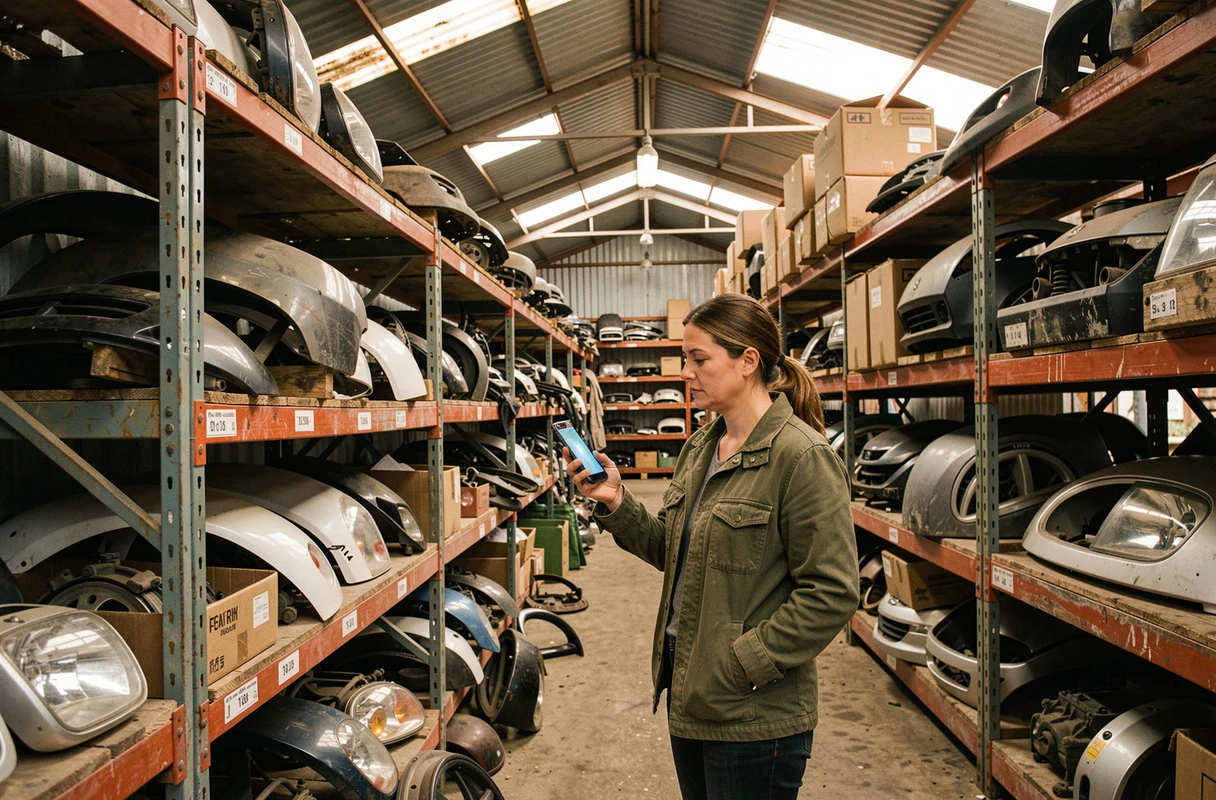
Used parts in Les Pennes-Mirabeau: check the reference before heading out
Time savings happen before arriving on site. Several pieces of information allow filtering out incompatibilities without leaving home.
- The OPR number (Original Part Reference) is found on the original part or in the vehicle’s technical documentation. It identifies the part unambiguously, beyond just the generic name.
- The engine code, visible on the registration document (fields D.2 and D.2.1), distinguishes engine variants within the same model. Two different engine codes often mean different mounts, wiring harnesses, or peripherals.
- For body elements, the manufacturer color code is found on the label of the driver’s side door frame. A color shade discrepancy, even minimal, is visible in bright sunlight.
Communicating these three pieces of information by phone or email to the AES Plan de Campagne junkyard allows staff to verify actual compatibility in their stock. This step takes a few minutes and avoids an unnecessary round trip between Marseille and Les Pennes-Mirabeau.
Visual inspection in junkyards: spotting defects that slow down installation
Finding a part quickly does not mean it will be installable without further work. Field experiences highlight recurring defects that online photos do not show.
Hidden cracks under the paint are the first trap with body parts. A bumper may appear intact to the naked eye but have micro-cracks at the mounting points. Running a finger along the mounting tabs and internal ribs is often enough to detect them.
Corrosion under the paint, the second source of problems, particularly affects fenders and sills. A bubble or slight swelling of the paint signals ongoing oxidation that will compromise the part’s durability. In contrast, a mechanical part (alternator, air conditioning compressor) with surface rust on the casing generally does not pose any functional issues.
Damaged fixings during disassembly are the third point to check. A broken bolt or stripped thread on an engine mount turns a twenty-minute replacement into a several-hour ordeal. Systematically examining anchor points before purchasing saves more time than any online search.
Inter-junkyard networks and platforms: expanding the search when the part is missing
The stock of a single junkyard, even a large one, does not cover all references. Recent vehicles or less common models regularly pose availability issues.
Several options complement local searches:
- Reuse parts platforms (France Casse, Caréco, Opisto) aggregate the stocks of hundreds of ELVs across France. Searching by registration or OEM reference directly filters compatible parts.
- Private listings on Le Bon Coin sometimes offer parts from accident vehicles that have not yet entered the ELV circuit. Traceability is lower, but prices are often lower.
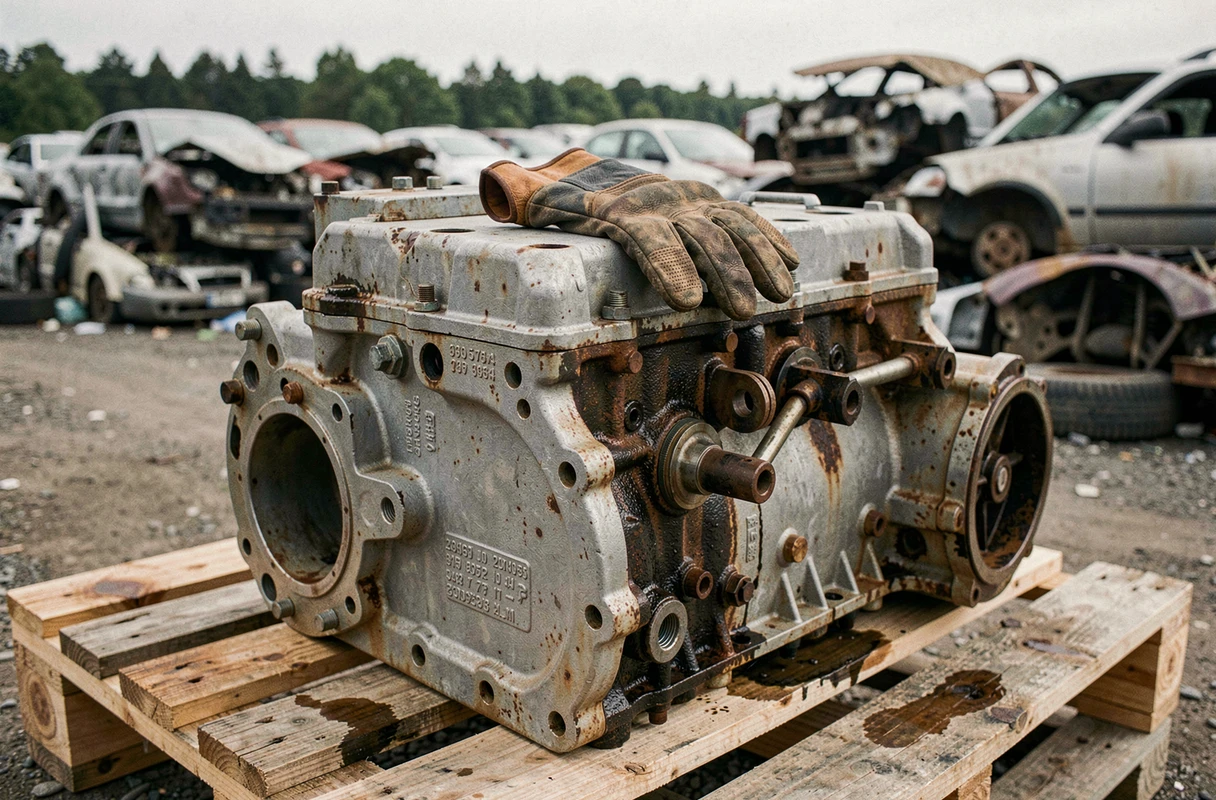
- Reconditioned reuse parts, offered by some networks, provide a warranty that is an intermediate option between new and raw used. Reconditioning mainly concerns mechanical components (turbo, injectors, gearboxes).
Cross-referencing at least two sources before heading out significantly reduces the risk of unnecessary trips. Online searching takes ten minutes; a round trip to Les Pennes-Mirabeau from Marseille takes at least forty.
The factor that truly determines the speed of a junkyard search is neither the size of the stock nor the geographical proximity. It is the accuracy of the identification upstream. A motorist who arrives with the engine code, OPR reference, and color code leaves with the correct part in a single visit. Those looking for “a bumper for Clio 3” risk returning multiple times.