Veynes occupies a unique position in the Hautes-Alpes: a historic railway crossroads between Grenoble and Marseille, the municipality also finds itself at the intersection of issues that shape its summer daily life. Between a cultural program that extends beyond the halls to invest in neighborhoods, a body of water plagued by repeated swimming bans, and a built heritage in need of restoration, the small town of Buëch concentrates dynamics that are rarely addressed together.
Cyanobacteria at the Veynes water body: a recurring health constraint
The summer of 2026 highlighted a problem that tourist agendas prefer to ignore. The Veynes water body was closed for swimming twice within a few weeks, first at the end of June, then again in July, due to the proliferation of cyanobacteria.
This recurrence is not trivial. It occurs in the middle of the season, when the water body is one of the few accessible cool spots without a car from the town center. The municipality has announced regular analyses in view of a possible reopening, but the available data do not indicate whether the phenomenon will remain occasional or establish itself permanently.
For families and visitors planning a stay in Veynes, this situation concretely alters the summer leisure offerings. Updated information on closures and reopenings is relayed on ville-veynes.fr and through the digital municipal panels.
Veynes holds its banquet: culture outside the walls in the Buëch
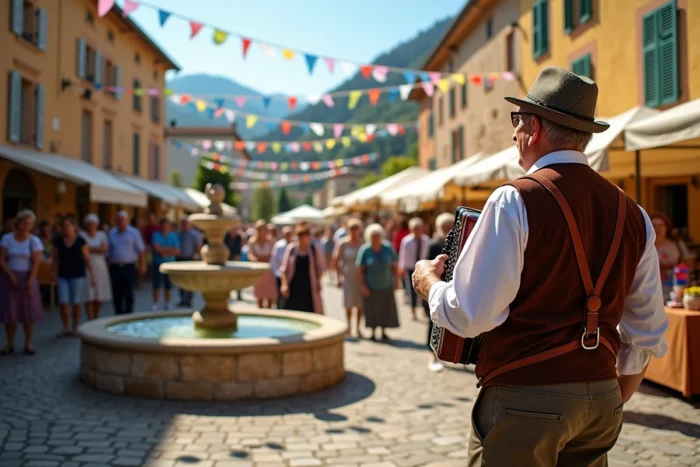
The cultural program of Veynes is no longer limited to the walls of the Quai des arts, the cultural hub of the municipality. In early July 2026, the event “Veynes holds its banquet” offered concerts and festive times directly in the neighborhoods, notably featuring the Buëch Brothers on stage.
The principle is simple: bring culture into everyday spaces rather than a dedicated hall. Free and open to all, this format reconfigures how cultural life unfolds in a municipality of this size. It is not a festival in the classical sense, but a series of light interventions designed for places that are not usually stages.
The Great Escape, a traveling week in the Buëch valley
Another key event of the summer: The Great Escape, scheduled from July 27 to 31, 2026. This traveling week combines music, storytelling, and shared meals, with a philosophy focused on slow travel and encounters. The route traverses several points in the Buëch territory, including Veynes, and is aimed at both residents and passing visitors.
These two events outline a summer cultural calendar rooted in the territory, far from off-ground festivals. They rely on a local network (associations, producers, artists from Buëch) rather than national headliners.
Built heritage of Veynes: what Châteauvieux tells us
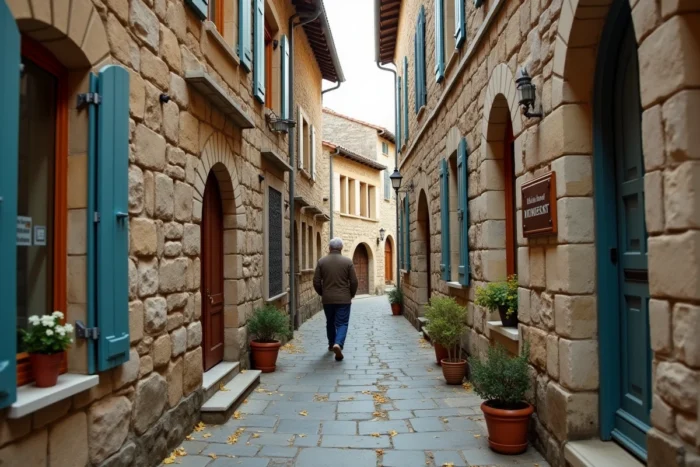
The heritage of Veynes is not limited to the Veynois railway eco-museum, often mentioned in guides. The hamlet of Châteauvieux, located in the municipality, is the subject of a preservation project led by the Heritage Foundation. The challenge: to safeguard the traces of a rural community life that is gradually disappearing.
This type of rural heritage, consisting of modest buildings, bread ovens, washhouses, and dry stone walls, testifies to a collective way of life typical of mountain hamlets. Its restoration mobilizes cross-funding, between individual donations and institutional aid.
Guided walks and temporary exhibitions
In parallel, Veynes offers guided walks that trace the railway and urban history of the municipality. The summer of 2026 also saw the installation of a painting exhibition at the Notre-Dame de Pitié chapel, a heritage site rarely open to the public.
These initiatives remain modest in terms of attendance, but they contribute to a dynamic discovery of the village that goes beyond simply passing through by car on the road to Gap.
Summer activities in Veynes: markets, corso, and national holiday
The calendar of activities in Veynes follows a classic rhythm for a municipality in the Hautes-Alpes, with some local particularities worth noting:
- The Veynes corso, which celebrated its fifteenth edition in July 2026, remains a unifying event combining decorated floats, music, and parades through the streets of the center. Feedback from the ground describes a family atmosphere, supported by local associations.
- The night markets of local producers and artisans, organized in the evening, allow visitors to discover the agricultural sectors of Buëch (cheeses, honey, lavender) in a friendly setting.
- The festivities of July 13 include a fireworks display, with a story in 2026 titled “The Iron Lace” around the world of Gustave Eiffel, signifying a desire to link fireworks and storytelling.
These activities primarily target residents and vacationers already present in the valley. Veynes does not seek to compete with Gap or the Dévoluy resorts in terms of programming. The scale remains that of a central village that animates its living area.
Veynes in the Buëch: a positioning between the Alps and Provence
Geographically, Veynes is situated at the junction between the regional natural park of the Provençal Baronnies and the Dévoluy massif. This positioning gives it access to varied landscapes, from limestone gorges to lavender fields, without the overcrowding of more well-known alpine sites.
The Château de Montmaur, accessible for free and self-guided visits in the summer, constitutes a natural excursion from Veynes. The cliffs of Céüse, renowned in the climbing community, are also nearby.
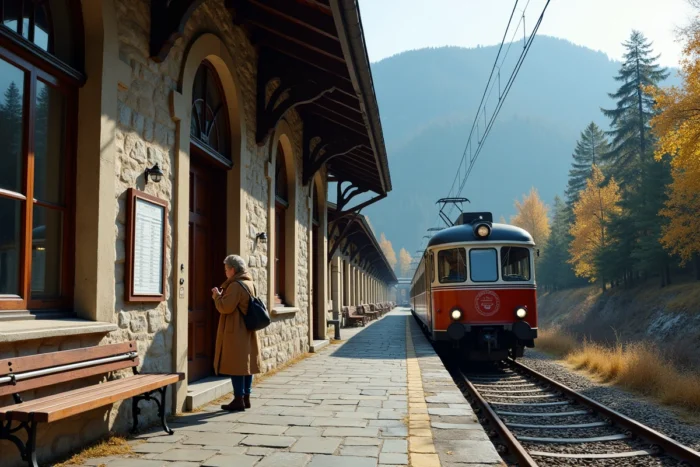
The railway service in Veynes, with TER lines from Grenoble and Marseille, remains a concrete asset for visitors without a car. However, the frequency of trains limits the possibilities for spontaneous evening trips, which impacts access to nighttime activities for those without vehicles.
Veynes does not market itself as a spectacular destination. The municipality functions more as a discreet base camp for exploring the Buëch, with a local life that continues to exist outside tourist flows. It is precisely this gap between the actual offer and the low online visibility that makes on-site discovery more interesting than what search engines suggest.