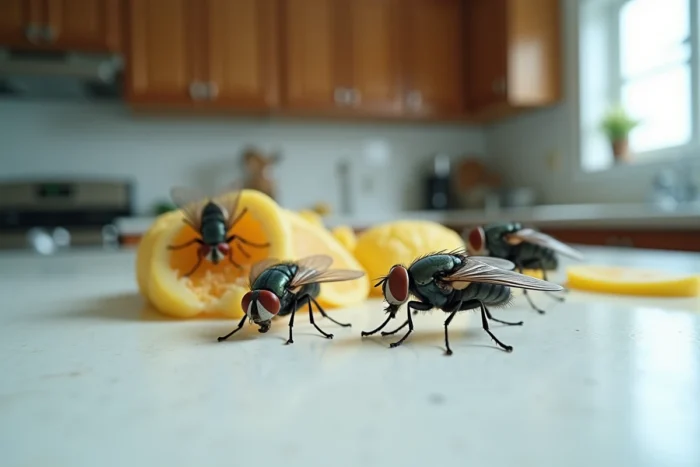
When flies multiply in a home, the annoyance goes beyond mere buzzing. Each individual can potentially carry pathogens on its legs and proboscis, turning a trivial nuisance into a matter of domestic health. Understanding which species are proliferating, what they actually deposit on your food, and how to break their reproductive cycle allows you to assess the risk before choosing a method of elimination.
Bacteria Carried by House Flies: Table of Documented Pathogens
The house fly (Musca domestica) does not bite, but it contaminates. Its mouthparts and legs come into contact with decaying matter, feces, or sewage before landing on a countertop or fruit.
Top Santé reminds us that a single fly can deposit bacteria such as Salmonella, E. coli, or Helicobacter pylori on food. Competitors often list diseases without prioritizing the actual risk in a domestic setting. The table below groups the most cited pathogens from French-speaking health sources, along with the associated type of disorder.
| Pathogen | Main Disorder | Domestic Transmission Context |
|---|---|---|
| Salmonella | Gastroenteritis, typhoid fever | Food left exposed, open trash can |
| E. coli | Diarrhea, urinary infections | Kitchen surfaces, unwashed fruits |
| Helicobacter pylori | Gastric ulcers | Indirect contact via contaminated utensils |
| Staphylococcus | Food poisoning | Exposed meat or dairy products |
| Streptococcus | ENT infections, skin infections | Damp areas (bathroom, sink) |
When you notice many flies in the house, the first reflex should be to check if any food has been left exposed, as this is the most direct vector of contamination.
Vulnerable individuals (young children, the elderly, immunocompromised) are most at risk for complications. A repeated infestation often signals an indoor sanitation problem that needs to be addressed at the source, not just with an insecticide.

Breeding Sites and Life Cycle: Why Flies Return After Each Treatment
Killing adults does not solve anything if the breeding sites remain active. A female house fly can lay between 400 and 1,000 eggs during her lifetime, which lasts from two weeks to a month. The eggs hatch within hours in a warm, humid environment, explaining the acceleration of infestations in summer.
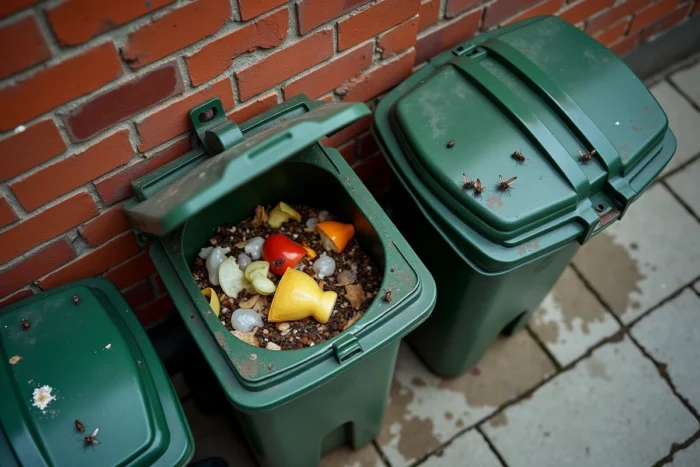
The larvae develop in decaying organic matter. Indoors, this concerns several specific areas that occupants often neglect.
- The bottom of the trash can, under the bag, where liquid residues stagnate and ferment between cleanings
- The trap of the sink or shower, which accumulates organic matter and provides the moisture necessary for sewer fly larvae
- Poorly ventilated indoor compost bins or fruit bowls left at room temperature, which particularly attract fruit flies
- Animal litter or cages not regularly cleaned, sources of ammonia and decaying matter
Removing these breeding sites is the only action that prevents the cycle from repeating. An insecticide treatment without a thorough cleaning of the breeding areas only delays the problem by a few days.
Flies and Food Safety During Hot Weather
Food poisoning prevention campaigns now include insect control in domestic recommendations. Keeping food exposed, combined with the presence of flies, increases the risk of diarrhea, gastroenteritis, and other digestive infections.
During heat waves, the cold chain is more easily broken. A dish left out for two hours on a countertop above 30 °C attracts flies and accelerates bacterial multiplication. The two phenomena reinforce each other.
Several concrete actions reduce exposure:
- Always cover dishes with a lid or plastic wrap, even during outdoor meals
- Empty and wash kitchen trash cans at least twice a week in summer, cleaning the bottom of the bin with diluted bleach
- Store ripe fruits in the refrigerator rather than in an open bowl, especially in the presence of fruit flies
These measures are part of basic food safety, just like handwashing, but they are rarely applied consistently when the presence of flies is not perceived as a health signal.
Methods for Eliminating Flies: Comparative Effectiveness of Natural and Professional Solutions
The choice of method depends on the extent of the infestation and the nature of the species present. Chemical aerosol insecticides quickly eliminate adults, but they pollute indoor air and pose health risks to occupants, especially when used repeatedly in poorly ventilated rooms.
Natural Repellents and Home Traps
Cider vinegar mixed with a few drops of dish soap in a bowl attracts fruit flies through fermentation. This trap works well for fruit flies but remains ineffective against house flies or sewer flies.
Essential oils of lavender, citronella, or eucalyptus temporarily repel adult flies. They do not kill larvae or eggs, and their effect diminishes within a few hours.
Professional Pest Control Intervention
When the infestation persists despite thorough cleaning and the removal of organic matter sources, a professional identifies the species involved and locates the nests. The intervention generally includes a targeted larvicide treatment in the breeding areas, which public solutions do not allow.
A trap or repellent never replaces the removal of the breeding site. The logic is always the same: address the cause (organic matter, stagnant moisture) before the symptom (visible adult flies).
The presence of a few flies in summer is normal. However, an infestation that returns every week despite regular cleaning points to a hidden breeding site (drain, crawl space, wall cavity). In this case, identifying the species allows for locating the nest, as each type of fly lays eggs in a different substrate. This identification determines whether the problem can be resolved with a clean trap or requires structural intervention.