The long-distance coach network in France now connects most urban areas, from the major routes Paris-Lyon or Paris-Bordeaux to lesser-known regional connections. Organizing a bus trip within France relies on three pillars: route research, ticket purchase, and managing the journey itself. Each step has its technical specifics, especially since the widespread use of digital tools.
Digital Ticketing and m-Tickets: What Changes for Bus Travelers
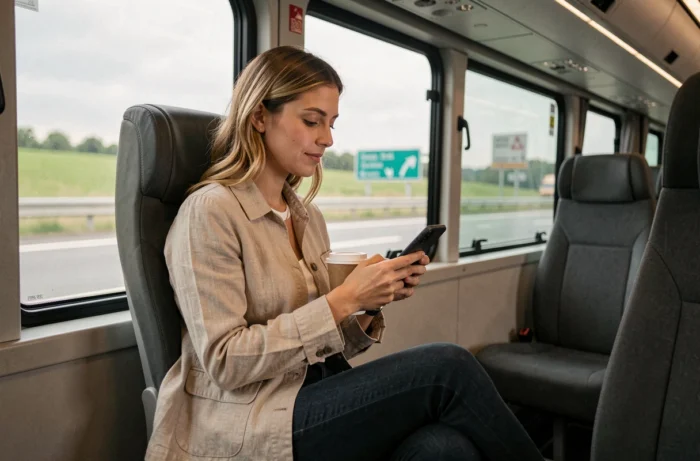
Preparing for a coach journey no longer necessarily requires a physical ticket counter. Several regional and intercity networks now offer m-tickets purchased and validated on smartphones, directly from an official transport app. In Île-de-France, transport tickets can be acquired and activated without paper support via the network’s app.
This shift towards dematerialized ticketing simplifies logistics before departure. Comparing schedules, reserving a seat, and receiving confirmation on a single screen avoids queues at the bus station. For destinations served by multiple operators, platforms like Voyagenbus aggregate offers and allow users to view prices and schedules on the same screen.
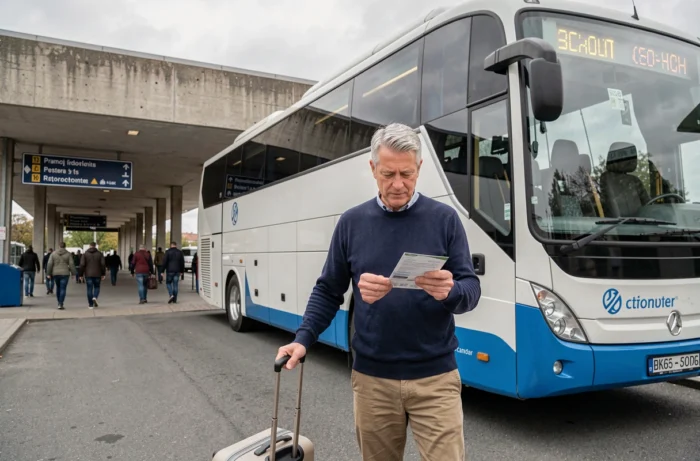
A technical point to check before each trip: not all routes currently accept m-tickets. On some rural or seasonal routes, the paper ticket remains the only format recognized by the driver. Checking the validation conditions on the operator’s website helps avoid unpleasant surprises at boarding.
Bus Routes in France: Finding the Right Line Without a Centralized Comparator
Unlike the rail network, coach transport in France does not have a single aggregator covering all lines. Each operator manages its own reservation system, schedules, and destinations. This fragmentation complicates route research, especially for journeys with connections.
Cross-Referencing Sources for a Reliable Journey
The most reliable method is to cross-reference at least two sources. Mapping applications (like Google Maps) often display long-distance coach lines in their route suggestions, along with estimated duration and sometimes price. Checking directly on the operator’s website then confirms actual schedules and baggage transport conditions.
- Check the frequency of the line: some connections only operate a few days a week, especially off-season
- Verify the exact stop, as the bus station and long-distance bus stop are not always in the same location in a city
- Ensure that any potential connection allows for sufficient margin, as delays in coaches are more frequent than in trains on secondary routes
No search engine guarantees the completeness of bus lines in France. Local or seasonal operators may sometimes only appear on the website of the relevant region or community of agglomeration.
Opening Up the Île-de-France Bus Network to Competition in 2026
The Île-de-France bus network is undergoing a structural transformation. The opening to competition, led by Île-de-France Mobilités, is set to introduce new operators starting in autumn 2026. In practical terms, passengers should not notice any immediate changes in fares or vehicle colors, as the organizing authority retains control over passenger information and the fare structure.
The impact for travelers organizing their bus journeys primarily affects the reliability of online data. During the transition phase, it is likely that some third-party applications will take longer to integrate operational changes. Prioritizing the official Île-de-France Mobilités app ensures access to up-to-date schedules, regardless of which operator is actually providing the service.

Preparing for a Long-Distance Coach Journey: Luggage, Duration, and Comfort
A Paris-Lyon journey by coach takes significantly longer than by train, but the ticket price is often much lower. This trade-off between duration and budget is the main decision criterion for most travelers.
What the Ticket Price Doesn’t Tell You
Baggage allowance varies from one operator to another. Some allow one suitcase in the hold and one carry-on bag, while others charge for the second piece of luggage. Reading the general conditions before booking helps avoid extra charges at boarding.
- Bring something to cover up: the air conditioning on coaches is often set to a low temperature, even in summer
- Charge your devices before departure, as not all seats have a functional power outlet
- Plan to bring water and a snack for journeys over three hours, as breaks are not systematic on all lines
Intermediate stops can significantly extend travel time. A coach advertised as taking four hours may take five if the line serves multiple cities along the route. The number of stops is usually detailed in the itinerary during booking.
Choosing Your Seat
On long-distance routes, reserving a specific seat is sometimes possible for a small extra fee. Seats at the front offer less vibration, while those at the back are noisier but often the last to be occupied. For travelers prone to motion sickness, a window seat at the front remains the most suitable choice.
France has enough coach lines to connect most major cities and many medium-sized urban areas. The difficulty lies not in the offer itself, but in the dispersion of information among operators, applications, and regional websites. Systematically cross-referencing two sources of schedules and checking ticketing conditions before each departure remains the safest method to avoid setbacks.