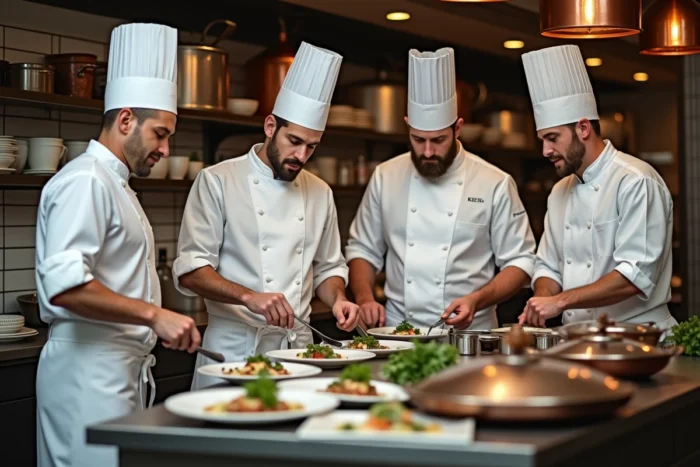
French gastronomy remains a pillar of the world’s culinary heritage. Ranking the most notable French chefs requires going beyond the simple accumulation of Michelin stars to examine their real impact on the profession: structuring of brigades, international influence, technical innovations passed down to future generations. This ranking prioritizes these criteria of lasting influence.
To explore in detail the top 10 French chefs, one must trace back to the very foundations of modern cuisine and follow the thread to contemporary talents who are reinventing the codes.
1. Auguste Escoffier
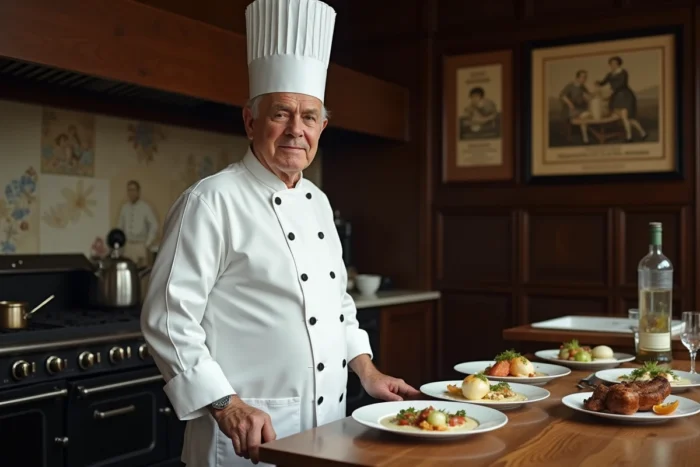
Born in 1846 in Villeneuve-Loubet, Auguste Escoffier laid the foundations of modern kitchen brigade organization. Before him, professional kitchens operated without a clear hierarchy, which slowed down service and multiplied errors.
His brigade system, with its specialized positions (saucier, rôtisseur, pâtissier), remains the norm in most fine dining restaurants. He also simplified menus and popularized the concept of a signature dish, linking for the first time a chef’s identity to a specific creation.
2. Paul Bocuse
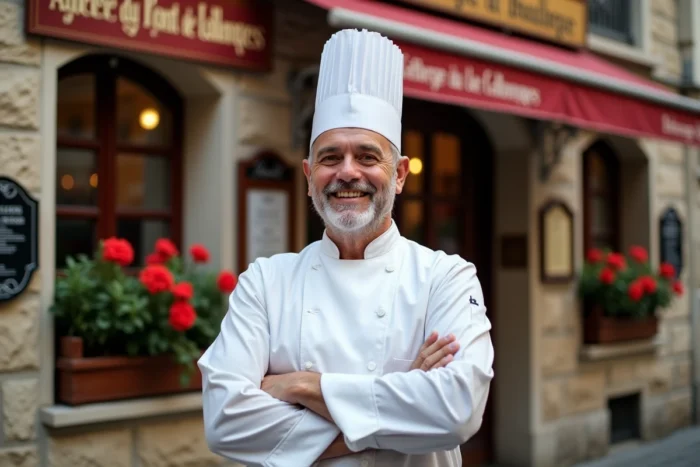
Paul Bocuse made French cuisine a recognizable brand worldwide. Based in Collonges-au-Mont-d’Or near Lyon, he held onto his three Michelin stars for over half a century, a record that reflects rare consistency.
Bocuse transformed the chef into a public figure. He created the Bocuse d’Or competition, which has become the most followed international culinary competition. His influence goes beyond technique: he changed the social perception of the profession.
3. Joël Robuchon
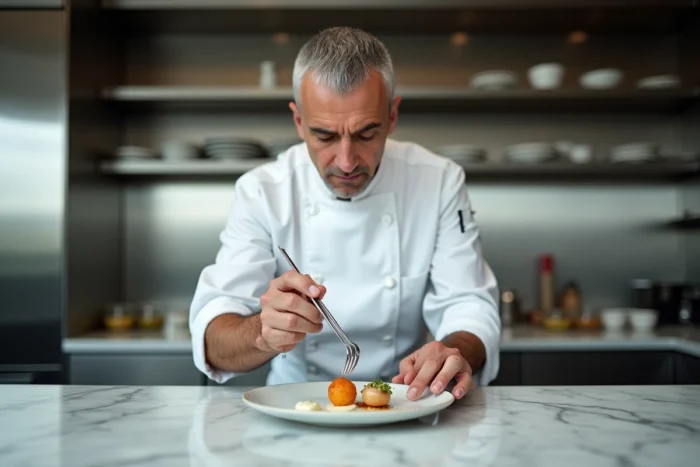
Joël Robuchon accumulated the most Michelin stars ever awarded to a single chef. His cuisine was based on obsessive technical precision, evident even in his famous mashed potatoes, which became a symbol of perfection applied to a simple dish.
He also innovated with the concept of L’Atelier, a restaurant format centered around an open counter that spread from Paris to Tokyo. This model proved that high gastronomy could abandon formality without losing its demands.
4. Alain Ducasse
Alain Ducasse built a network of restaurants across several continents, from Monaco to Paris, London, and New York. His approach is distinguished by his ability to delegate without sacrificing culinary coherence, an entrepreneurial model that few chefs have managed to replicate.
Ducasse has made French gastronomy a structured industry, with its training schools, publications, and consultations for luxury hospitality. He embodies the figure of both the chef-entrepreneur and the cook.
5. Anne-Sophie Pic
Anne-Sophie Pic is the only female chef to hold three Michelin stars in France. Based in Valence at Maison Pic, she took over the family establishment after a period of lost stars and brought it back to the top.
Her work on aromatic pairings, often unexpected (jasmine and shellfish, for example), has redefined the boundaries of taste in contemporary French cuisine. Her self-taught journey, without formal training in a hospitality school, makes her path all the more unique.
6. Pierre Gagnaire
Pierre Gagnaire represents the most creative side of French gastronomy. After the bankruptcy of his restaurant in Saint-Étienne in the 1990s, he bounced back in Paris where he earned three Michelin stars.
His cuisine explores the boundary between art and food. He regularly collaborates with physicochemist Hervé This, making him a pioneer of molecular cuisine applied in restaurants. His plates, often composed of multiple preparations, disrupt the classic structure of a single dish.
7. Thierry Marx
Thierry Marx has directed part of his career towards training and professional integration. His Cuisine Mode d’Emploi(s) schools offer short and free training aimed at people distanced from employment.
In the kitchen, he early explored sous-vide cooking techniques and molecular cuisine within his starred restaurants. His social commitment distinguishes his path from that of most chefs in this ranking.
8. Hélène Darroze
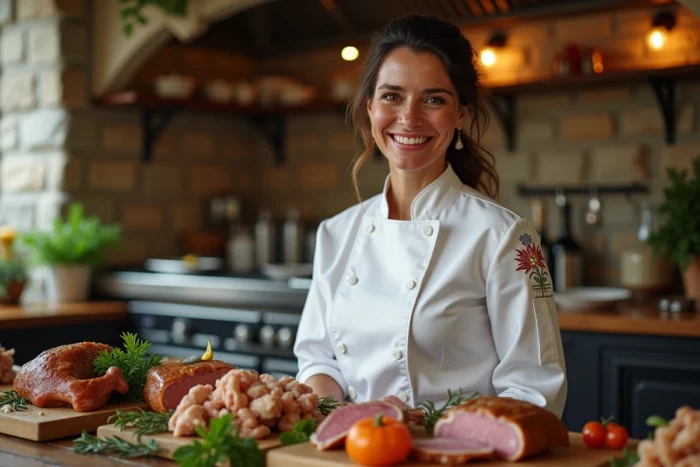
Hélène Darroze built her reputation between Paris and London, where she holds Michelin stars. Heir to a lineage of chefs from the Southwest, she claims a connection to the products and flavors of this region.
Her cuisine highlights local producers and ancient breeds, a positioning that anticipates current concerns about traceability and short supply chains in fine dining.
9. Guy Savoy
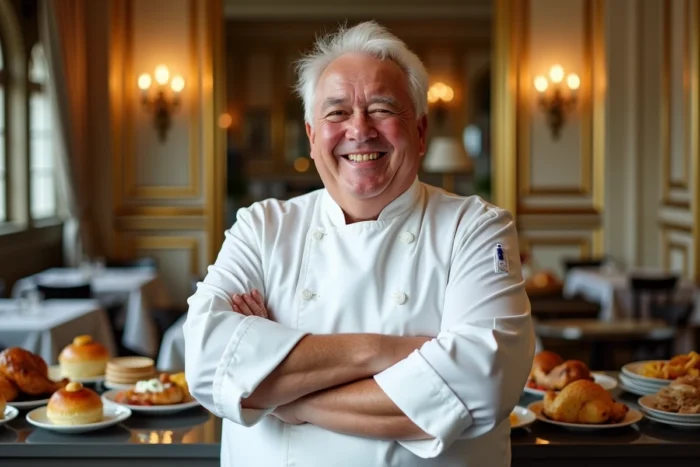
Guy Savoy established his main restaurant at the Monnaie de Paris, a historic setting that reflects his vision of cuisine as cultural heritage. His black truffle artichoke soup remains one of the most identifiable signature dishes of French gastronomy.
His approach prioritizes the raw product worked with sobriety. The available data does not always allow for measuring a chef’s pedagogical influence, but several recognized chefs began in his brigades.
10. Julia Sedefdjian
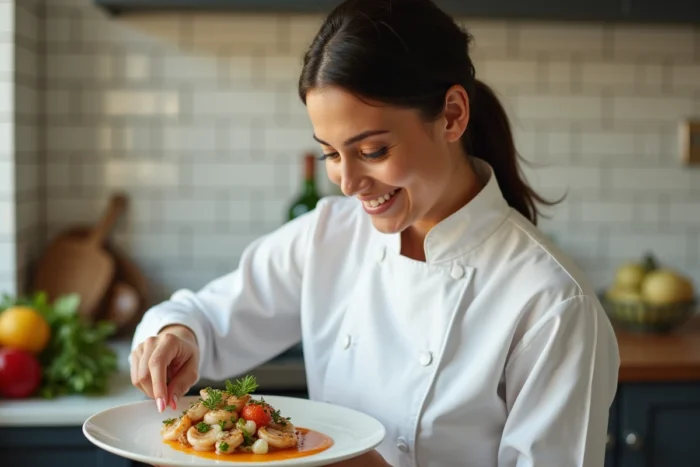
Julia Sedefdjian earned her first Michelin star at a very young age, making her the youngest starred chef in France. Her journey illustrates the generational renewal of French gastronomy, confirmed by the recent induction of young chefs into the Maîtres Cuisiniers de France in 2026.
Her Mediterranean cuisine, centered on fish and vegetables, aligns with a broader trend towards more plant-based and lighter plates. She represents a generation of French chefs who approach the profession with concerns different from their elders:
- A direct relationship with local producers, often documented on social media
- A marked attention to the sustainability of supplies and waste reduction
- A relaxed approach to the restaurant format, far from the formality of palaces
This ranking of French chefs reflects very different trajectories, from the system builder (Escoffier) to the young chef redefining the codes. The common thread remains a measurable impact on the profession, whether through training, technical innovation, or the influence of French cuisine worldwide.