
Between a rented pitch in a traditional campsite and the purchase of a buildable plot for a second home, the residential leisure park with plot transfer occupies an intermediate position that is rarely analyzed from a financial and legal perspective. In Vendée, this format attracts a profile of buyers looking to combine land ownership, vacation setting, and wealth leverage. What concrete differences separate this option from more well-known alternatives?
Plot transfer in PRL and pitch rental in camping: what structural costs reveal
The confusion between PRL and camping persists because both accommodate mobile homes. The difference lies in the nature of the acquired right, and its financial consequences are measurable.
| Criterion | PRL with plot transfer | Camping (rented pitch) |
|---|---|---|
| Nature of the right | Land ownership (notarial deed) | Renewable annual rental agreement |
| Type of financing available | Classic mortgage loan (low rates, long duration) | Consumer credit |
| Resale of the property | Free, without commission to the manager | Subject to the camping manager’s agreement, often with commission |
| Possible bank guarantee | Mortgage on the land | No real guarantee |
| Control of use (loan, rental) | Total, within the framework of the internal regulations | Regulated by the manager |
The most structuring point remains financing. Acquiring a PRL with plot transfer in Vendée opens the door to a mortgage loan with a mortgage guarantee, which significantly reduces the total cost of credit compared to consumer credit on a mobile home in a campsite.
On the other hand, the buyer in a campsite remains a tenant of the land. Their mobile home loses value each year without the land compensating for this depreciation. Resale depends on the goodwill of the manager, sometimes accompanied by a commission.
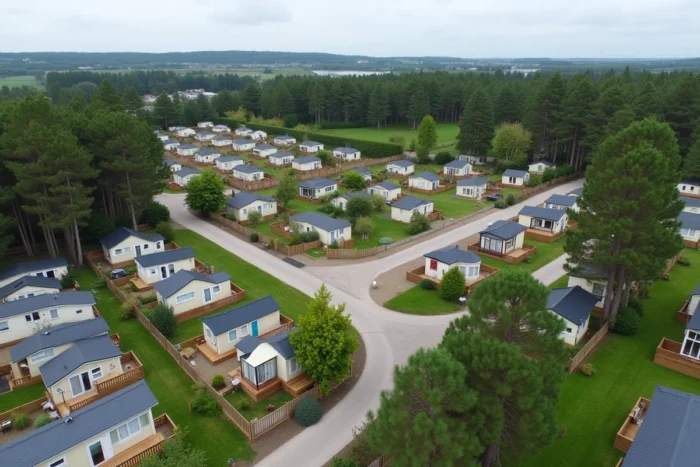
Land ownership in PRL: legal security and real right over the land
The plot transfer in PRL is based on a notarial deed that grants a real right over the land. This mechanism radically distinguishes PRL from campsites, as well as from non-buildable land where the installation of a lightweight habitat remains legally fragile.
On non-buildable land, the occupant is exposed to administrative recourse if the local urban plan changes or if the community contests the use. In a PRL, the regulatory framework is set by the articles of the Tourism Code (notably articles D333-3 to R333-6-1), which stabilizes occupancy over time.
This security has three direct consequences:
- The plot remains transferable at any time, regardless of the park manager, which protects the liquidity of the investment.
- The owner can install, replace, or renovate their mobile home or chalet without depending on an external commercial agreement, as long as they comply with the PRL specifications.
- The notarial deed allows the plot to be integrated into a wealth strategy (donation, inheritance), which a rental agreement in a campsite does not allow.
For a buyer considering passing on a property to their children or reselling it after a few years, this legal solidity changes the risk calculation.
LMNP status and seasonal rental in Vendée PRL
Vendée is among the most frequented departments during the summer season on the Atlantic coast. This seasonal rental pressure makes the status of non-professional furnished rental (LMNP) particularly relevant for plot owners in PRL.
Tax operation of LMNP applied to PRL
The owner of a plot with a mobile home can declare their rental income under the LMNP regime. This status allows for the accounting depreciation of the mobile home (and in some cases the fittings), which significantly reduces the taxable base of rental income.
Unlike a classic rental investment in built real estate, the entry ticket remains moderate. The owner thus combines personal use (family vacations, lending to relatives) and rental profitability during the weeks they do not occupy the property.
Advantage of the Vendée coastline for rentals
The rental demand in Vendée extends over a longer season than in many inland departments. Parks near Saint-Jean-de-Monts, Les Sables-d’Olonne, or the Noirmoutier coast benefit from a high occupancy rate between April and September. This extended season improves rental yield compared to PRLs located in areas with more concentrated traffic in July-August.

Charges and internal regulations: constraints to consider before buying
The purchase of a plot in PRL does not eliminate collective charges. The owner remains liable for annual management fees covering the maintenance of common areas, roads, and any infrastructure (pool, reception). These charges vary significantly from one park to another.
The internal regulations and specifications also govern the type of constructions allowed, their size, and their exterior appearance. Some PRLs impose strict aesthetic constraints (wood cladding, colors, maximum height). Reading the specifications before signing the notarial deed remains the only way to avoid unpleasant surprises.
A often overlooked point: the quality of park management directly influences the resale value of the plot. A poorly maintained PRL or one whose manager does not renew common facilities will see its plots depreciate, even if the owner has perfectly maintained theirs.
The choice of a PRL in Vendée with plot transfer commits one to a horizon of several years. The solidity of the legal structure (notarial deed, real right, freedom of resale) and access to mortgage credit are the two levers that separate this option from a simple purchase of a mobile home in a campsite. The rental yield under LMNP status depends, in turn, as much on the geographical location as on the management rigor of the park.