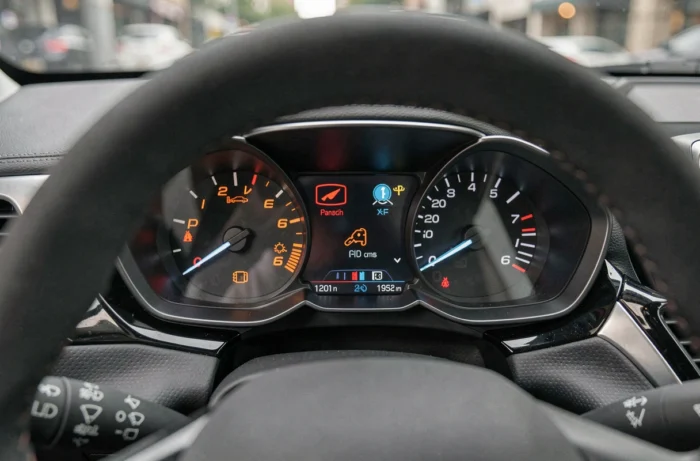
The dashboard of the Peugeot 208 displays around thirty different symbols depending on the engine type and model year. Each warning light combines a color and a pictogram to convey a level of urgency and identify the concerned system. Understanding this logic helps avoid confusing a simple operational information with a mechanical alert that requires immediate stopping.
48 V Hybrid Warning Light and AdBlue Alert: Two Signals Missing from Standard Guides
Most guides focus on engine, oil, and braking warning lights. Two alerts specific to the recent engines of the 208 deserve special attention because they directly affect the vehicle’s behavior.
On mild hybrid versions, a specific orange warning light for the hybrid system indicates an anomaly in the 48 V battery or the alternator-starter. The vehicle continues to operate in thermal mode, but the electric assistance disappears. The EV mode becomes unavailable, and fuel consumption increases significantly.
This warning does not trigger a degraded engine mode, which may give the impression that the problem is minor. However, the lack of diagnosis can lead to a gradual degradation of the low voltage high tension system.
On diesel engines, the AdBlue alert is not limited to a simple low level warning light. A countdown appears before the complete restart blockage. The anti-pollution system imposes this anti-start logic to ensure compliance with emission standards. Ignoring the initial orange alerts risks a total immobilization of the vehicle, sometimes far from an AdBlue refueling point.
To find a list of dashboard color codes for the Peugeot 208 organized by system, these two alerts are included alongside more common warning lights.

Comparison Table: Warning Light Color, Concerned System, and Appropriate Reaction
The table below groups the main warning lights of the Peugeot 208 by crossing three pieces of information: color, targeted mechanical or electronic system, and the reaction each alert imposes.
| Color | Concerned System | Meaning | Reaction |
|---|---|---|---|
| Red | Oil Pressure | Insufficient pressure in the circuit | Immediate engine stop |
| Red | Engine Temperature | Overheating of the coolant | Immediate stop, wait for cooling |
| Red | Braking | Low brake fluid level or handbrake engaged | Check handbrake, otherwise stop and check |
| Red | Battery / Alternator | Charging fault | Go to a garage without electrical accessories |
| Orange | Engine Management | Engine anomaly detected by the ECU | Electronic diagnosis within a few days |
| Orange | Anti-pollution / DPF | Saturated particulate filter or catalyst fault | Extended driving at high RPM, then diagnosis |
| Orange | AdBlue (diesel) | Low level or SCR system fault | Quick refueling, risk of anti-start |
| Orange | 48 V Hybrid System | Battery or alternator-starter fault | Driving possible, diagnosis recommended |
| Orange | Tire Pressure (TPMS) | Pressure loss detected on a tire | Check inflation, inspect the tire |
| Green | Turn Signals / Lights | Normal operation of an active system | No action required |
| Blue | High Beams | High beams activated | Switch to low beams when facing a vehicle |
This table shows a clear distinction between the two warm colors. A red warning light always requires a stop, while an orange warning light allows limited driving. Confusing the two levels of urgency remains the most common mistake.
Behavioral Differences According to Peugeot 208 Engine Type
The same pictogram can cover very different technical realities depending on whether the 208 is a PureTech petrol, BlueHDi diesel, or electric e-208.
Orange Engine Warning Light on Petrol and Diesel
On a PureTech, the orange engine warning light often indicates a fault related to ignition, lambda sensors, or the intake circuit. On a BlueHDi, the same light frequently points to the anti-pollution system: particulate filter, EGR valve, or AdBlue circuit. The pictogram is identical, but the underlying fault differs radically.
In contrast, on the electric e-208, this classic engine warning light does not exist. It is replaced by alerts specific to the electric powertrain, regenerative braking system, or high voltage battery.
Tire Pressure and Service
The TPMS (tire pressure) warning light functions the same way across all engine types. One often overlooked point: after corrective inflation or a tire change, a reset procedure via the dashboard menu is necessary to turn off the alert. Without this step, the light remains on even if the pressure has returned to normal.
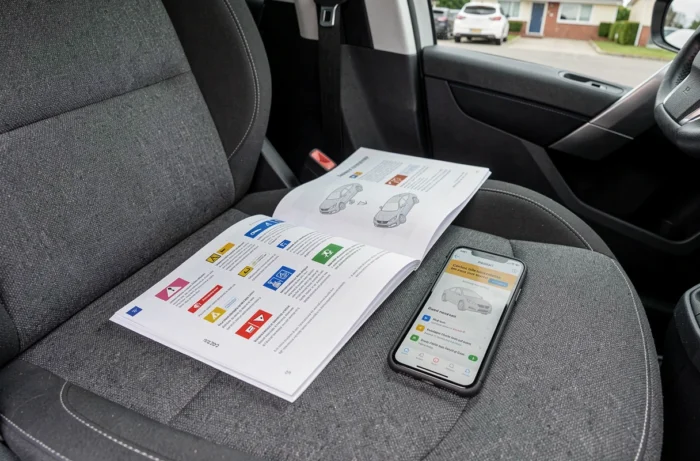
Access to the Official Peugeot 208 Manual: MyPeugeot App and QR Code
The user manual for the 208 lists all the warning lights with the exact pictograms used by the manufacturer. This document is accessible in two ways:
- Through the MyPeugeot app, downloadable on smartphones, which offers the complete user guide in digital format with an integrated search engine
- Via a QR code present in the vehicle or on the Peugeot online portal, which links to the PDF version of the manual corresponding to the exact year and engine type
Consulting the official manual rather than a third-party guide ensures that the pictogram corresponds correctly to the version and year of the concerned 208. The symbols have evolved between the first generation and the current model, especially for alerts related to the i-Cockpit system.
The logic of the Peugeot 208 dashboard is based on a stable principle: the color indicates the level of urgency, the pictogram identifies the system. Hybrid and diesel engines add specific alerts (48 V battery, AdBlue anti-start) that do not appear on petrol or electric versions. Checking the exact engine type before interpreting a warning light remains the most reliable reflex to avoid an erroneous diagnosis.