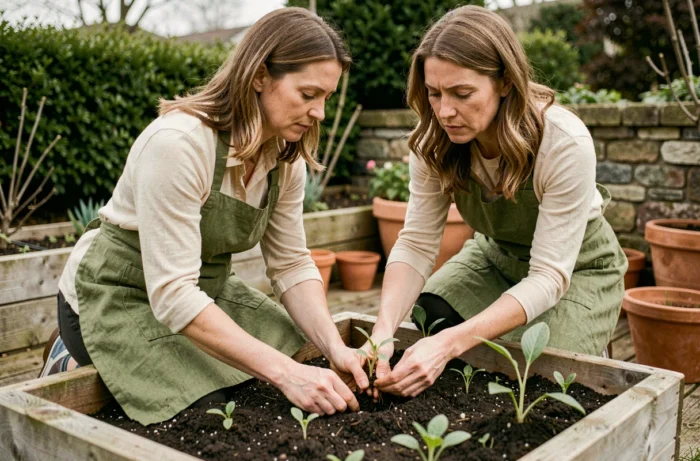
A waterlogged soil in March, a cracked earth in August, watering restrictions extending into autumn: succeeding in your garden all year round means first and foremost adapting to what the land and the weather dictate each month. Gardening is not done the same way in Brittany and in Var, nor on deep silt and on compact clay. However, a few well-timed actions on the calendar can change the game, from the vegetable garden to ornamental beds.
Water Restrictions and Garden Watering: What the Regulations Impose
In 2026, many French departments maintained severe restrictions until autumn, with bans or strict limitations on watering lawns, flower beds, and ornamental gardens depending on the local alert level. It is often thought that the vegetable garden is treated the same way, but several prefectural orders explicitly distinguish food crops from ornamental spaces. Watering the vegetable garden is often still allowed under time conditions, even when lawns are prohibited.
Failure to comply with a prefectural order can result in a fifth-class offense, with fines reaching up to 1,500 euros. Before connecting the hose, it is advisable to check the alert level of your department on the prefecture’s website.
Practically speaking, this pushes one to rethink their watering strategy. Thick mulching (at least a good layer of shredded material or straw) significantly reduces evaporation. Concrete techniques can also be found in practical articles on Jardinier.net, which cover several approaches suited to dry periods.
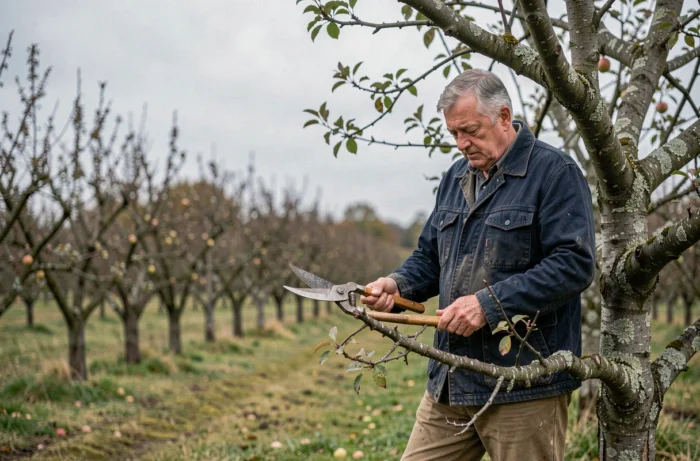
Preparing the Soil in Spring: The Gesture Many Rush
Gardeners are often seen tilling the soil with a tiller as soon as the first sunny days arrive. On clay soil still waterlogged, this is the best way to create a compact plow pan that will prevent roots from descending. Waiting for the soil to dry out before working it avoids this classic trap.
The test is simple: take a handful of soil and squeeze it. If it forms a sticky ball, wait. If it crumbles, you can intervene.
Fertilization: Adjusting the Dose to the Soil, Not the Bag
Spreading compost or organic fertilizer without knowing your soil is like seasoning a dish without tasting it. A soil already rich in nitrogen does not require the same treatment as a sandy soil leached by winter rains. Soil analysis in a laboratory is inexpensive and provides reliable information on pH, organic matter, and potential deficiencies.
A layer of mature compost spread on the surface is aimed for, which earthworms and microfauna will naturally incorporate. Not burying the compost deeply preserves the biological life of the top layers of soil.
Productive Vegetable Garden: Betting on Rotations and Associations
Planting tomatoes in the same spot three years in a row accumulates pathogens in the soil and depletes the same nutrients. Crop rotation remains the most effective lever for maintaining a healthy vegetable garden without resorting to treatments.
- Legumes (beans, peas, broad beans) fix atmospheric nitrogen in the soil. They are the first to be planted in a depleted plot.
- Solanaceae (tomatoes, peppers, eggplants) are greedy: they follow legumes to take advantage of the fixed nitrogen.
- Alliaceae (garlic, onion, shallot) tolerate poorer soil and complete the cycle before returning to legumes.
Crop associations also work in daily practice. Basil planted at the foot of tomatoes is not just a cliché: it attracts pollinators and limits certain pests. Feedback on this point varies by region and variety, but the principle of diversifying species on the same bed remains solid.

Autumn Maintenance and Winter Preparation: Protecting Without Overprotecting
Autumn is the time when the garden prepares in silence. Collecting fallen leaves on the lawn prevents the grass from suffocating, but these same leaves become free mulch on the beds. They are left to decompose at the base of shrubs rather than being bagged.
Autumn Planting: The Right Timing for Trees and Shrubs
The period from November to mid-December (excluding frost) is the ideal window for planting bare-root trees and shrubs. The root system establishes itself during winter, and the recovery in spring is much better than with a March planting.
For perennials, dense clumps are divided in autumn. This way, new plants are obtained without any purchase, and the mother plant grows back with more vigor.
Wintering the Vegetable Garden: Covering Bare Soil
Soil left bare during winter compacts under rain, loses its structure, and sees its nutrients leached away. Sowing a green manure (mustard, phacelia, rye) as early as September protects and enriches the soil. It is mowed before it goes to seed in spring, then incorporated superficially.
If green manure is not available, a thick layer of fallen leaves or straw will do the trick. The soil remains alive, loose, and ready to welcome the first plantings as soon as temperatures rise.
A productive and pleasant garden all year round relies less on spectacular interventions than on a series of simple actions, aligned with the real rhythm of the soil and the local climate. Checking water restrictions before watering, observing your soil before working it, covering the soil in winter: these reflexes prevent most disappointments that one discovers a season too late.