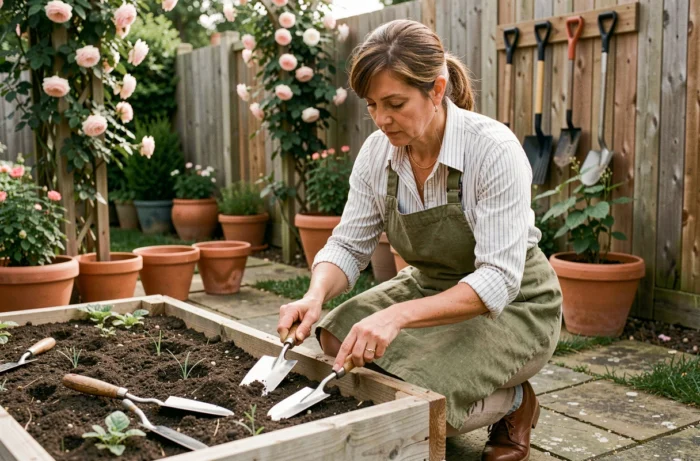
A pleasant garden relies on a choice of equipment suited to the soil, the area, and the actual tasks. Choosing garden equipment is not just about stacking tools in a shed: each tool serves a specific purpose, and a poor purchase results in fatigue, wasted time, or mediocre results on the plants.
Noise level of powered equipment: a selection criterion too often overlooked
Gardening guides compare lawn mowers and brush cutters based on power or autonomy. However, the guaranteed sound power level (Lwa) is listed on the label of every powered device sold in Europe, and it is an objective criterion that buyers rarely utilize.
Since Directive 2000/14/EC on the noise emissions of outdoor equipment, labeling the acoustic level has been mandatory. A delegated regulation (EU) 2024/1208 has amended Annex III of this directive, making new noise measurement methods mandatory starting May 22, 2025. Devices launched on the market after this date will comply with stricter testing procedures.
In practice, this means that manufacturers now offer quieter equipment and better documentation on their acoustic performance. Before purchasing a lawn mower or blower, comparing the displayed Lwa value helps eliminate overly noisy models, especially in residential areas where noise-related disturbances from gardening are subject to strict local regulations regarding hours.
To guide your search among manual and powered tools suitable for each use, Tout pour le Jardin’s equipment groups different categories that facilitate comparison.
Soil working tools: adapting the choice to the nature of the earth
A heavy clay soil cannot be worked with the same tool as a light sandy soil. It is the soil composition that dictates the purchase, not the other way around.
Spade, fork, or grelinette
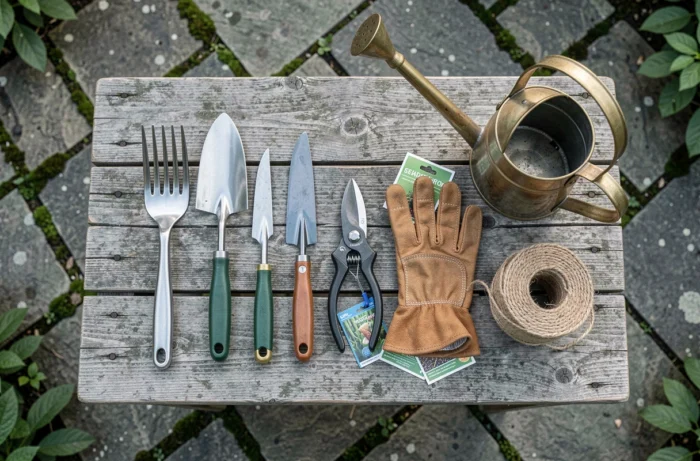
The spade is used to turn over loose soil and dig planting holes. On compact or stony ground, it quickly becomes exhausting and ineffective. The digging fork penetrates heavy soils better thanks to its tines that break up clods without sticking.
The grelinette offers an alternative to aerate the soil without turning it over, preserving the microbial life of the top layers. Its use requires a lever motion rather than a pushing effort, which relieves the back over large areas.
Claw and rake for refining
Once the soil is opened, the claw breaks up clods on the surface. The rake then levels the ground and removes plant debris. These two tools complement each other:
- The claw works deeply on the first five to ten centimeters, ideal before sowing grass or transplanting seedlings
- The rake smooths the surface and allows for even distribution of an amendment or mulch
- On very hard soil, using the claw after watering makes the work easier without straining the handle
Pruning and maintenance of plants: secateurs, loppers, and beyond
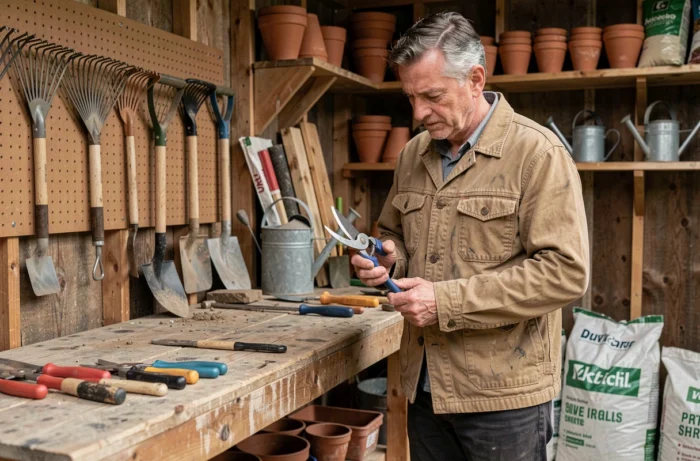
The regular maintenance of a garden relies on the regular pruning of shrubs, roses, and hedges. The choice between a bypass secateur and an anvil secateur depends on the type of cut desired.
The bypass blade produces a clean cut, suitable for green wood and living stems. The anvil crushes the fiber more, which is suitable for dead or dry wood. Using an anvil secateur on green wood damages the branch and promotes diseases.
For branches with a diameter exceeding the capacity of the secateur, the lopper takes over. A ratchet or geared model multiplies the force and reduces effort on the arms. Beyond four to five centimeters in diameter, a pruning saw becomes necessary.
Garden watering: choosing a system consistent with its area
A watering can is sufficient for a few planters. As soon as the cultivated area exceeds a few square meters, a hose system with modular connectors saves considerable time.
Drip irrigation reduces water consumption compared to traditional spraying, as it targets the base of the plants and limits evaporation. This system is particularly suitable for vegetable gardens, hedges, and aligned flower beds.
Rotary or oscillating sprinklers cover lawns more evenly. The choice between the two depends on the shape of the area to be watered: an oscillating for a rectangular area, a rotary for a circular or irregular space.
- Check the available water pressure at the outdoor tap before purchasing an automatic watering kit
- A mechanical or electronic timer allows for watering early in the morning when evaporation is minimal
- Standardized quick connectors prevent leaks and simplify switching from one accessory to another (gun, sprinkler, extension)
Gloves and protection: an often underestimated aspect
Garden gloves are not a secondary accessory. An unsuitable pair tears after a few uses or reduces finger sensitivity to the point of making handling seedlings impossible.
For pruning roses or working in brambles, reinforced gloves with long cuffs protect the forearms. For repotting and sowing, thin nitrile or latex gloves offer precision and protection against moisture and irritants in potting soil.
Garden kneepads or a foam kneeler reduce pressure on the joints during prolonged ground work. This type of equipment is inexpensive but radically changes comfort during a weeding or planting session.
The choice of garden equipment is best made tool by tool, based on the soil, the area, and the plants already in place. A quality secateur and a fork suited to the soil serve more than a collection of generic accessories stored at the back of a shed.