
The typical profile of a real estate buyer has shifted. Nearly 45% of transactions today are made by first-time buyers, compared to less than 40% for second-time buyers, whereas the latter dominated the market just a few years ago. This reversal is changing financing strategies, asset management decisions, and how a real estate project should be structured from the outset.
Mortgage Rates in 2025-2026: Real Impact on Borrowing Capacity
The decline in rates that began at the end of 2024 has produced tangible effects. A household borrowing over twenty years today gains several tens of thousands of euros in purchasing capacity compared to the same monthly payment a year earlier. We observe that this regained margin is prompting some buyers to raise their budget without recalculating their actual effort rate, which is a common calibration error.
The debt-to-income ratio remains capped at 35%. The drop in nominal rates does not change this ratio: it increases the borrowable capital, not the safety margin. A solid bank application includes projected condominium fees, updated property taxes, and, for a rental investment, a realistic vacancy rate in the financing plan.
We recommend locking in the simulation based on the rate obtained during the principle agreement, without betting on a potential future renegotiation. Professionals assisting buyers on the Mon Conseiller Immo website find that the best-prepared applications obtain more favorable conditions than those presented in a hurry.
Energy Performance Certificate and Energy Audit: Regulatory Constraints Before Purchase
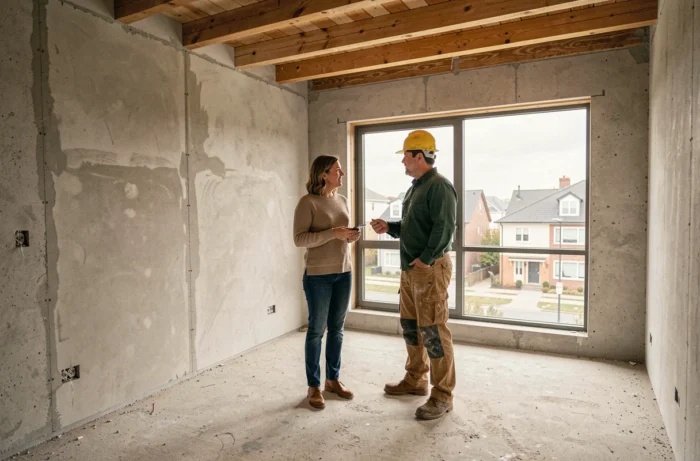
The mandatory energy audit for the sale of properties classified E, F, and G is transforming real estate negotiations. An order dated June 11, 2026, also introduces a new A0 label for the most efficient buildings, applicable to both sale and rental. The energy performance certificate is no longer an ancillary document; it is a price negotiation lever.
A property classified F or G suffers a depreciation that can represent a significant portion of its value. For the buyer, this is not necessarily a trap: it is a purchasing lever, provided that the costs of energy renovation are accurately estimated before signing the preliminary agreement.
Three points to systematically check before committing to a thermal sieve:
- The estimated cost of insulation and heating system replacement work, ideally validated by a certified contractor and not just by the regulatory audit
- Eligibility for public aid (MaPrimeRénov’, eco-PTZ) based on the planned occupancy status, whether primary residence or rental
- The regulatory deadline: a property classified G can no longer be rented from January 1, 2025, with F following in 2028, which directly impacts the rental investment strategy
A buyer who incorporates the cost of renovation into their purchase offer negotiates on a factual basis. A buyer who ignores this signs an underestimated preliminary agreement.
First-Time Buyers and Rental Investment: Two Incompatible Project Logics
Rental investment now accounts for only about 12% of credit production in 2025, down from nearly 15% previously. This decline is not cyclical: it reflects a tightening of fiscal policies, an increase in energy constraints, and declining net profitability in most metropolitan areas.
For a first-time buyer, the perspective is different. The re-centered zero-interest loan, local assistance programs for home ownership, and declining rates create a window of opportunity. We find that the best-structured first-time buyer applications combine a personal contribution covering notary fees, a simulation including property tax, and a backup plan in case of bank refusal.

The most common mistake is mixing the two logics. A property purchased for living in is not chosen with the same criteria as a property intended to generate returns. Gross rental yield says nothing about net cash flow after taxes and charges. An investor who only thinks in terms of gross yield often discovers an unanticipated monthly savings effort.
Preliminary Sales Agreement and Suspensive Clauses: Technical Points to Master
The preliminary sales agreement binds both parties. Suspensive clauses protect the buyer, but only if they are drafted precisely. A poorly calibrated financing clause, with an unrealistic amount or ceiling rate, can be deemed unfulfilled in bad faith and expose the buyer to losing their deposit.
Clauses to systematically negotiate:
- Suspensive financing clause with amount, duration, and maximum rate consistent with the real credit market at the time of signing
- Suspensive clause related to the results of the energy performance certificate or energy audit if the property has not yet been diagnosed
- Substitution clause to allow purchase via a real estate investment company if the asset strategy requires it, provided it is planned from the preliminary agreement
- Timeframe for fulfilling suspensive conditions aligned with the average time to obtain a bank agreement, which regularly exceeds 45 days during periods of high demand
A signed preliminary agreement without review by a legal professional is a measurable asset risk. The notary intervenes at the promise stage, but a specialized lawyer or independent advisor can review the preliminary agreement in advance to identify unbalanced clauses.
The real estate market in 2025-2026 offers more favorable financing conditions than in 2023, but regulatory constraints, particularly energy-related, add a layer of technical complexity to each transaction. A successful real estate project relies less on market timing than on the rigor of financial and legal structuring.