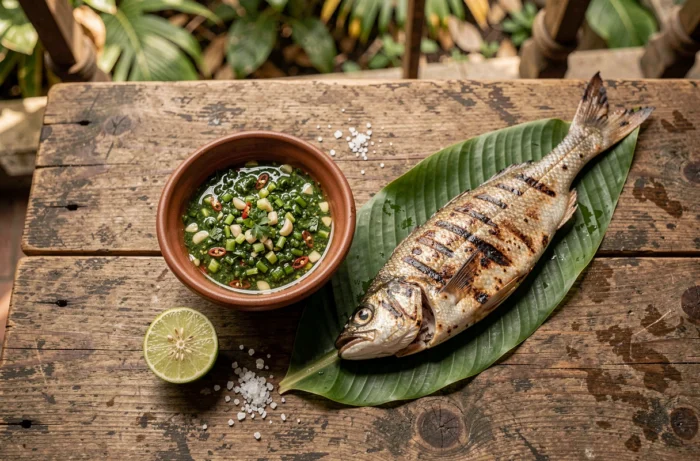
When you take a grilled fish off the barbecue and pour fresh sauce chien over it, the reaction is immediate: the aroma of the herbs is released upon contact with the heat, the lime cuts through the fat, and the chili awakens every bite. This Creole sauce from the Caribbean is not limited to Sunday barbecues.
It can be paired with many more dishes than one might imagine, as long as you understand how its ingredients interact with the textures and flavors of each preparation.
Sauce chien on grilled fish: the duo not to miss
The most common reflex in the Caribbean is to serve sauce chien on grilled fish. Red snapper, mahi-mahi, bluefin tuna: firm-fleshed fish absorbs the sauce better because its texture holds the mixture of oil, scallions, and lime without falling apart.
The technical point that changes everything is the temperature. The sauce is poured at room temperature over the fish taken off the grill, never cold. The moderate thermal shock allows the aromas of parsley and chili to diffuse into the flesh without cooking the herbs, which would cause them to lose their freshness.
To know what to eat with sauce chien beyond fish, it is already noted that this temperature logic applies to most successful pairings: the sauce accompanies a hot dish but is never heated itself.
Fillets of delicate fish (sole, cod) work less well. Their texture mixes with the sauce instead of carrying it, and you lose the contrast that makes the dish interesting.
Smoked chicken and grilled meats: adjust the chili according to the cooking
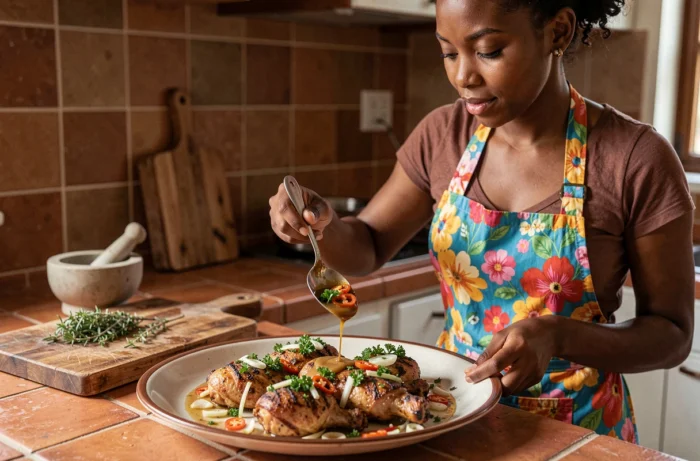
Smoked chicken is the second great classic. The meat smoked over sugarcane has a strong flavor, and sauce chien adds acidity and freshness to balance this very smoky side.
On grilled red meat (ribeye, flank steak), you can slightly increase the amount of chili in the sauce. The fat of the meat softens the burning sensation of capsaicin, allowing for an increase in intensity without making the dish aggressive in the mouth.
On the other hand, for grilled chicken without smoking, the classic recipe with a mild vegetarian chili is sufficient. We seek the aroma of the chili, not its heat. Opinions vary on this point according to family habits, but in Martinique as in Guadeloupe, the dosage is adapted to the type of meat, not to a single standard.
Pork ribs and spare ribs
We rarely think of it, but marinated and then grilled pork ribs pair very well with sauce chien. The natural sweetness of caramelized pork contrasts with the acidity of lime. Adding the sauce at the last moment prevents the lime juice from “cooking” the surface of the meat and altering the grilled crust.
Accras, vegetables, and starches: sauce chien as a table condiment
Sauce chien is not only used as a topping for proteins. It is found as a table condiment throughout Creole cuisine, placed in the center for everyone to serve themselves.
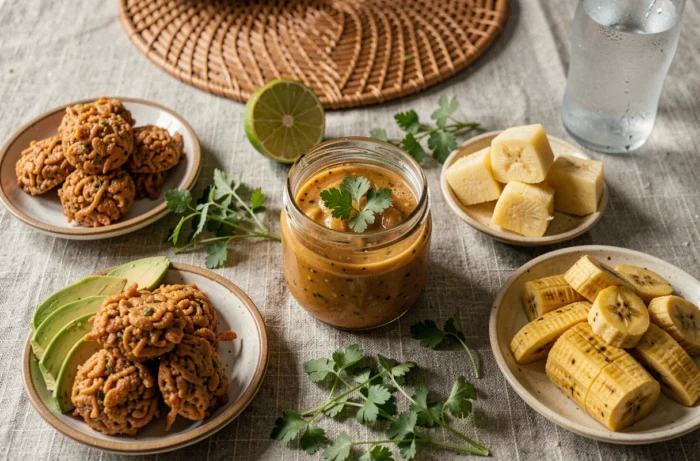
- Cod accras are probably the most indulgent pairing: the crispy frying absorbs just the right amount of sauce, and the hot-cold contrast is remarkable.
- Grilled vegetables (chayotes, eggplants, thick slices of sweet potatoes) gain depth with a spoonful of sauce chien, especially if olive oil was used in the preparation.
- Plain white rice, served as a side, becomes a real dish when drizzled with sauce chien. This is a daily use in the Caribbean, far from the weekend barbecue.
- Yams and plantains, simply boiled, find in the sauce a dimension that butter alone does not provide.
The common point of these pairings: a food with a relatively neutral or mild taste, which the sauce enhances without overpowering.
Sauce chien and seafood: lobster, shrimp, conch
Lobster with sauce chien is a festive dish in Guadeloupe and Martinique. The lobster, split in half, is grilled and then generously topped. The sweet flesh of the crustacean meets the acidity of lime and the heat of chili: it’s a pairing that works because sauce chien replaces both butter and lemon juice that would otherwise be used.
For grilled shrimp, dip directly into the sauce rather than drizzling. The flesh being smaller and more delicate, a brief contact yields better results than prolonged immersion.
Conch, being more rubbery, requires a slightly more liquid sauce. A spoonful of boiling water is added to the preparation to loosen it, allowing the sauce to penetrate the dense fibers of the shellfish.
Fresh herbs and sodium: a balance to watch
Sauce chien is naturally low in salt if prepared at home. Its flavor relies on parsley, scallions, lime, and chili, not on salt. This is a concrete advantage when paired with already seasoned dishes like accras or smoked chicken.
Stacking multiple sources of salt in the same meal remains the main trap. If the fish has been salted before cooking, reduce the salt in the sauce. If serving accras (salty frying) as a starter with sauce chien, lighten the main dish.
The current trend in Creole cooking leans towards more fresh herbs and less sodium. Sauce chien fits perfectly into this logic since its aromatic intensity comes from the plant, not the mineral. Replacing part of the salt with an extra drizzle of lime gives a brighter result without losing flavor.
Sauce chien benefits from being prepared a few minutes before serving so that the finely chopped scallions and parsley release their oils without wilting. On fish, meat, vegetables, or starches, the rule remains the same: a hot food, a fresh sauce, and a chili dosage suited to what you are accompanying. It is this simplicity that makes it such a versatile condiment on a Caribbean table as well as at a barbecue in mainland France.